
Movies or a Master Class: Why Passive Viewing Loses to Action
Going to the movies is a classic, but let's be honest: you sit in the dark for two hours, keep quiet, and look at the screen. You won't learn anything new about the person next to you, except how they eat popcorn. A master class is the exact opposite. It's a live action where you interact, communicate, and see each other's true emotions in real time. Instead of passive viewing, you become the main characters of your own evening.
A Common Goal Unites: How Creating Something New Brings People Closer
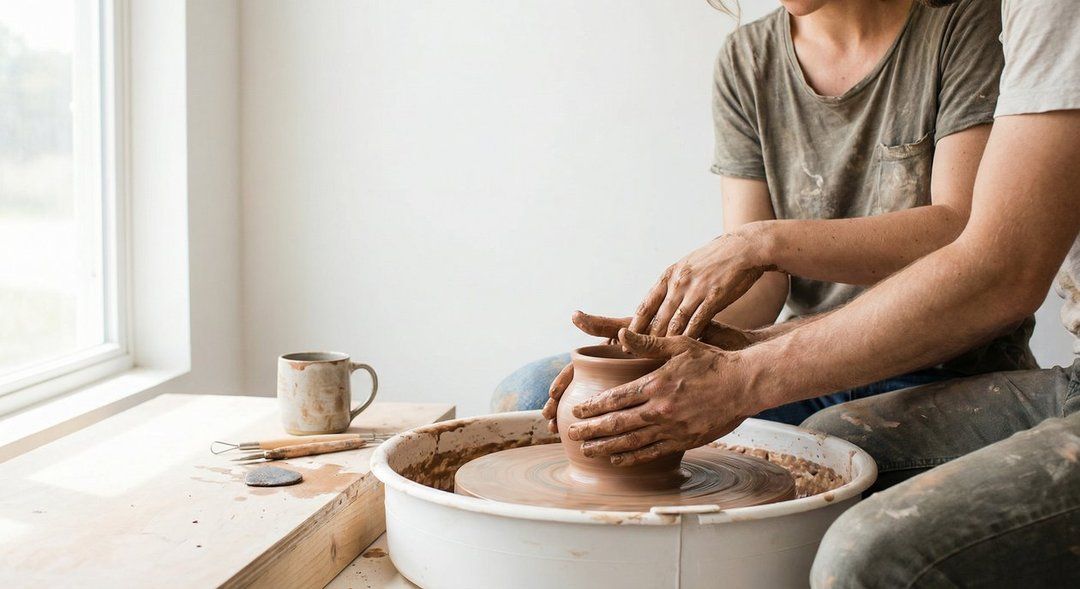
When you mold a clay cup together or try to cook the perfect Italian pasta, you have a shared mission. This imperceptibly turns you from two strangers into a real team. Achieving a result together, even if it's just a delicious dinner or a funny drawing, creates an invisible bond. You experience a small victory for two, which is an excellent foundation for trust.
The Right to Make Mistakes: Why an Imperfect Result is Normal and Fun
Many people are afraid of creative get-togethers because of the thought 'I can't draw' or 'everything will burn'. But that's the main feature! A crooked vase or slightly oversalted sauce is the best reason for sincere laughter. Shared minor failures instantly relieve tension. You show that you are not afraid to be imperfect and know how to treat yourself with irony, and this is an extremely attractive trait.
Ceramics, Painting, or Cooking: How to Choose the Perfect Format for Both
The choice of direction depends on your characters. A culinary master class will suit those who love dynamics and delicious food. Pottery is an ideal option for calm natures who appreciate tactility and focus. And painting with a glass of wine is the golden mean between creativity and relaxation. The main thing before the meeting is to make sure that the chosen format does not cause stress for the partner and is genuinely interesting to them.
Natural Communication: Conversations Without Awkward Pauses and Interrogations
During a regular meeting in a coffee shop, awkward pauses often arise, and attempts to keep the conversation going sometimes resemble an interview. During a master class, your attention is shifted to the process. You discuss what you are doing right now: asking to pass the paint, asking for advice, or simply commenting on your actions. This removes tremendous pressure—the conversation flows naturally, and any pause is easily filled with hand work.
Tactile Contact: How Shared Work Imperceptibly Breaks Down Barriers
During the creative process, you inevitably find yourselves in a shared space. Accidentally touching a hand while passing a tool, helping to tie an apron, or simply leaning closer to look at a partner's work—these are those small tactile moments that break down physical barriers. They happen completely naturally, do not look intrusive, and help you feel comfortable around the person much faster.
A Souvenir to Remember: Material Proof of Your Wonderful Evening
Unlike a finished cup of coffee, after a master class, you are left with something material. A painting you made yourself, a molded plate, or even just shared photos covered in flour—this is your first shared memory that you can take home. Every time they look at this item, the person will subconsciously remember you, your laughter, and those positive emotions that you experienced together.